
Definition
- Fracture of the Coronoid
Incidence
- 2 – 10 % of posterior dislocations of elbow
Classification
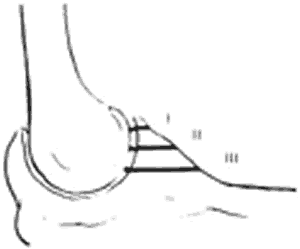
- Classification – Regan & Morrey (JBJS 1989)
- I = tip of process
- II = < 50 % of process
- III = > 50 % of process
- (± A = no dislocation, B = dislocation)
Aetiology
- Hyperextension of the elbow. Associated with elbow dislocation up to 33% of the time.
Pathology
- Loss of anterior bundle of MCL into coronoid
- Trochlea shears off coronoid in hyperextension
History
- Mechanism of Injury
- High energy vs low energy
- Possibility of elbow dislocation
- Nerve symptoms in hand
Examination
- Look
- swelling
- bruising
- Feel
- areas of tenderness
- radial pulse
- Move
- Neurology
- thorough examination of upper limb nerves
Investigations
Xrays
Treatment
Type I
Tip of coracoid – ignore, early ROM. Occasionally arthroscopic debridement of a prominent malunited coronoid tip is required.
Type II
Less than 50% of coracoid.
If elbow stable, early ROM
If elbow unstable, ORIF
Type III
More than 50% of the coracoid
A fracture here not only disturbs the bony anatomy but makes the anterior band of the MCL incompetent.
This can disturb the attachment of the brachialis, which provides an important dynamic stabilizing effect, plus there are the consequences of the type II lesion.
Treatment is with ORIFAll types need early ROM.
In cases of instability post repair, a hinged external fixator is required.
Complications
- Nonunion
- Malunion
- Nerve problems
- Stiffness